
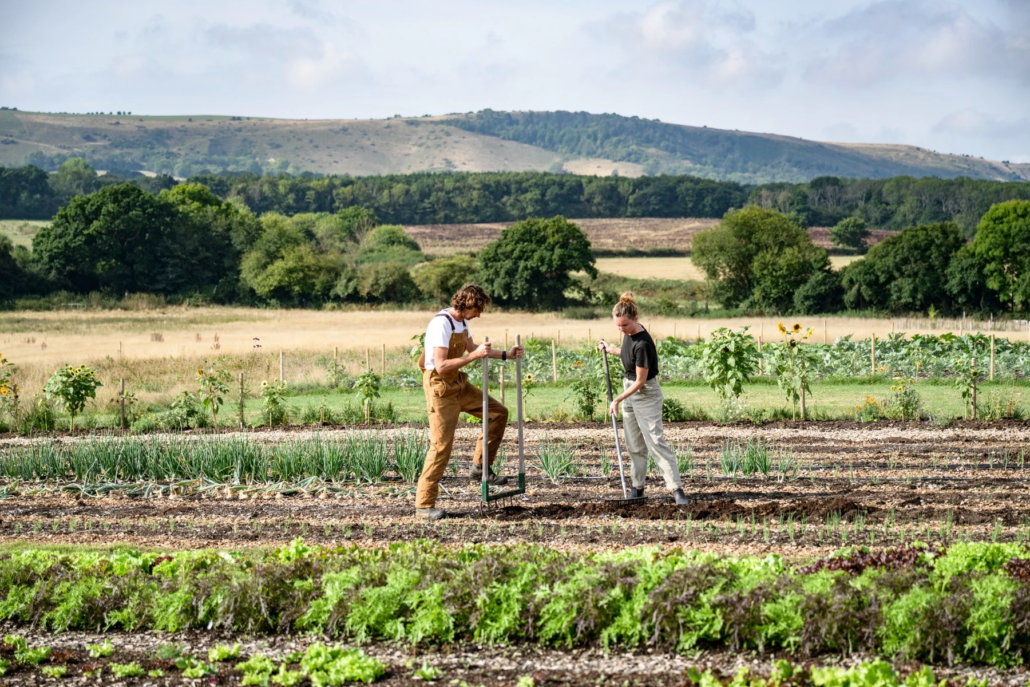
NbS in Agriculture: The Case of an Agroecological Farm
Event report · Recording
NbS in Agriculture: The Case of an Agroecological Farm
Key takeaways on agroecology: what it is, how farms transition, and how progress is measured.
Key takeaways from Esmeralda’s introduction to agroecology
Definition and Goals of Agroecology
Agroecology is a holistic, land-based approach to farming that maximizes ecological processes to support sustainable agricultural production. It emphasizes healthy soils, biodiversity, circular agriculture, and local food systems.
Multi-level Transformation Framework
The transition to agroecology operates across five levels:
- Levels 1 to 3 focus on farm-level changes, such as improving efficiency, substituting natural inputs, and redesigning systems for biodiversity and resilience.
- Levels 4 and 5 expand to food system-level transformations, aiming to reconnect farmers and consumers and rebuild the global food system with equity and sustainability at its core.
Agroecology as a Compass, Not a Certification
Unlike labels or certifications, agroecology is considered a guiding framework for transitioning toward a resilient food system. It values participatory science, integrates local knowledge, and rejects industrial power concentration in the food chain.
Socio-Political Dimensions
Agroecology is not only a set of techniques but also a political movement advocating for fairness, inclusivity, and solidarity with small farmers globally. It challenges current economic structures and power imbalances in the food system.
International Recognition and Measurement
Agroecology is recognized globally, with frameworks such as the FAO’s 10 elements and 13 principles. Tools like TAPE (Tool for Agroecology Performance Evaluation) help measure progress, supporting farmers at various stages of transition.
More News & Events

Nature Futures 25: Event recap
Speakers from across sectors on the opportunities and challenges of the transition to a nature-positive future.
Read the article
Mainstreaming Green Buildings in the EU
Green roofs, living walls and other nature-based solutions for urban buildings, with EFB and ANCV.
Read the article
Regenerative Ocean Farming & Blue Economy
Seaweed farming, restorative aquaculture and the blue economy, with Gareth Murphy and Simona Fondate.
Read the article
