
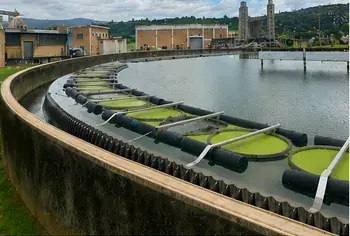
Water Management
Daphne Water Solutions
Nature-based wastewater treatment that uses Daphnia to remove harmful chemicals, with no energy or chemical inputs.
United Kingdom
Mission and inspiration
Daphne Water Solutions was founded to address one of the most pressing environmental challenges of the twenty-first century: how to safely reuse water while reducing the environmental footprint of wastewater treatment. The company emerged from over a decade of research at the University of Birmingham exploring how the sentinel species Daphnia evolved tolerance to pollution. This work led to an unexpected discovery. Daphnia populations resurrected from pre-industrial lake sediments were more effective at tolerating and accumulating modern contaminant mixtures than contemporary populations exposed to decades of pollution.
Inspired by this finding, Daphne Water Solutions developed a novel nature-based wastewater treatment technology that harnesses proprietary Daphnia strains as living biofilters to remove persistent and mobile toxic chemicals (PMTs), micropollutants, nutrients, and microplastics from wastewater. By removing these harmful chemicals from water effluent, the technology protects the ecosystem and human health by preventing their recirculation and bioaccumulation through the food chain.
Daphne Water Solutions envisions a future where wastewater is no longer a liability but a resource. By harnessing nature to deliver low-carbon, chemical-free treatment, the company seeks to reduce pressure on freshwater resources, protect biodiversity, and enhance climate resilience.
Business model
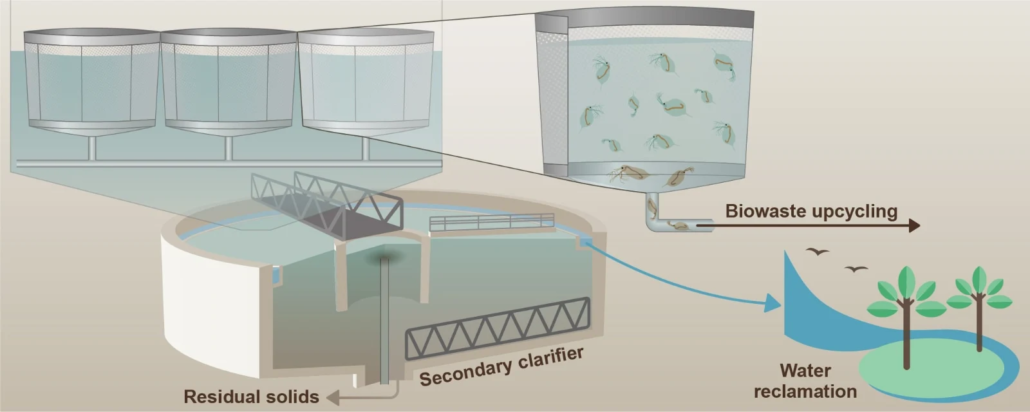
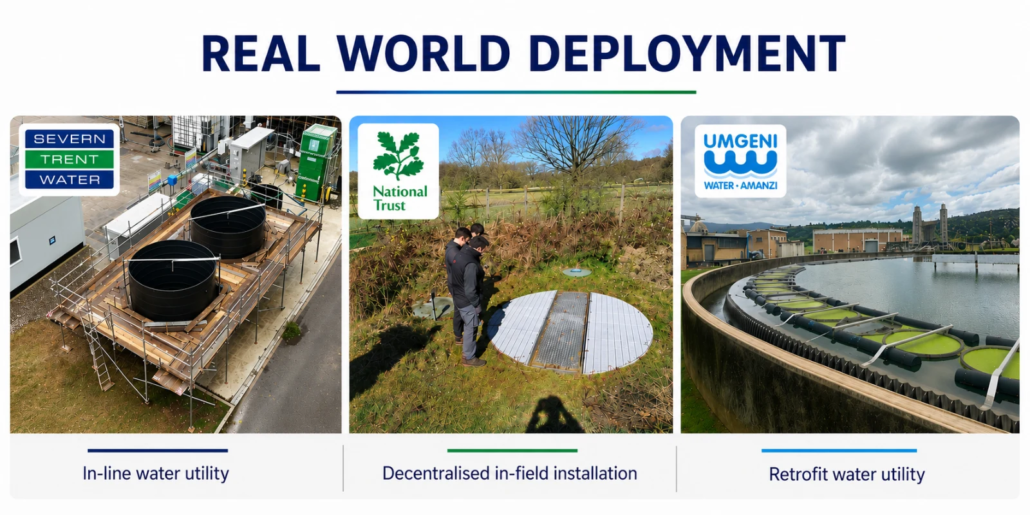
Daphne Water Solutions works with water and wastewater utilities, industrial wastewater producers, and environmental land managers seeking sustainable solutions for water treatment, water reuse, and environmental protection. The company delivers a nature-based tertiary treatment technology that can be retrofitted into existing treatment infrastructure or as an in-line end-of-pipe solution.
Unlike conventional advanced treatment technologies, the system requires no chemical dosing or energy inputs. It also avoids the large secondary waste streams and concentrated brines generated by many membrane- and adsorption-based treatment processes. Instead, the technology produces only small quantities of biological biomass, which can be treated to remove accumulated contaminants and subsequently recycled as fertiliser, supporting circular resource use.
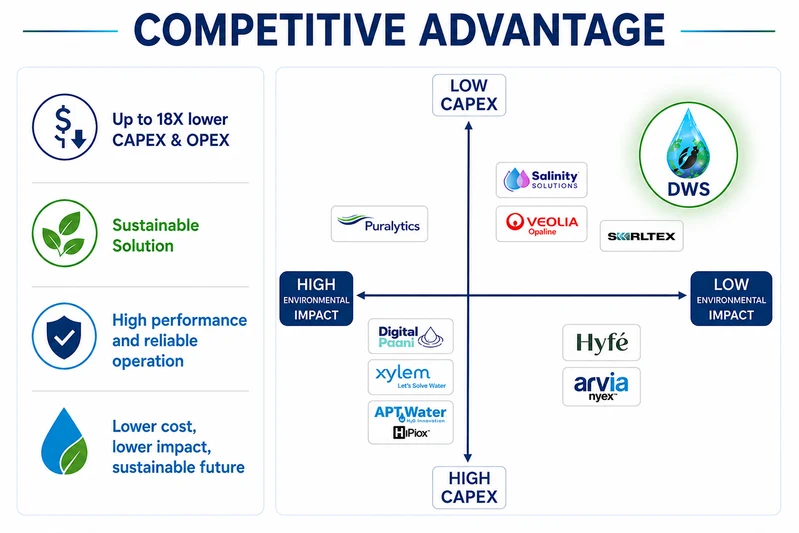
A key advantage of the technology is its flexibility. Systems can be tailored to customer requirements and deployed either as standalone polishing units or integrated directly within existing treatment processes. Because installations do not rely on large concrete structures, life cycle assessment studies have demonstrated carbon footprint reductions of up to 98% compared with conventional tertiary treatment technologies.
The business model combines:
- Engineering design and integration services
- Supply and installation of proprietary treatment systems
- Licensing of the technology platform and proprietary Daphnia strains
- Long-term operation, maintenance, and performance optimisation
- Monitoring and compliance support
This model combines upfront equipment sales with recurring revenue from licensing, maintenance, and operational support, creating long-term partnerships with customers while continuously improving environmental performance.
Challenges and hurdles
Like many disruptive technologies, Daphne Water Solutions is entering a market that is evolving faster than regulation. While concern over persistent and mobile toxic chemicals (PMTs), such as PFAS, pharmaceuticals, and microplastics, is increasing globally, regulatory requirements for their removal are still emerging in many jurisdictions. As a result, water utilities face the challenge of preparing for future compliance requirements while balancing current operational and financial constraints.
A second challenge relates to the perception that nature-based solutions are difficult to scale. Previously developed biological treatments often required large land footprints or have struggled to maintain performance at operational scale, creating understandable caution among adopters.
Finally, biological systems are inherently dynamic. Although this adaptability is one of their strengths, regulators and asset owners often seek highly predictable treatment performance under a wide range of environmental and operational conditions.
Daphne Water Solutions has addressed these challenges through a combination of scientific validation, engineering innovation, and strategic partnerships. By demonstrating broad-spectrum contaminant removal with up to 98% lower carbon footprint than conventional tertiary treatment technologies, the company provides customers with a future-ready solution that anticipates tightening environmental regulations while supporting net-zero targets. Working closely with visionary early adopters and utility partners has enabled the technology to progress from laboratory validation to a real-world prototype and commercial-scale deployments.
To meet more stringent treatment requirements, Daphne Water Solutions has also developed modular cascade configurations that use gravity to connect treatment units and repeatedly polish wastewater streams, enabling progressively higher contaminant removal efficiencies without increasing energy demand. As ongoing commercial trials continue to generate operational data, the company expects to further demonstrate scalability, reliability, and regulatory compliance, helping to accelerate the adoption of nature-based solutions across the water sector.
Future and opportunities
Daphne Water Solutions believes the future of water treatment lies in working with biological systems rather than replacing them. As water scarcity, chemical pollution, and climate pressures intensify, the demand for sustainable treatment technologies that enable safe water reuse is expected to grow rapidly worldwide.
Building on the successful prototype-scale demonstration of its technology under continuous-flow operation at a municipal wastewater treatment plant, the company is now progressing towards large-scale commercial deployment. Strategic partnerships with leading technology providers and water sector organisations are creating opportunities for rapid scale-up and integration into existing treatment infrastructure.
Beyond the United Kingdom, Daphne Water Solutions is actively pursuing international expansion through partnerships in South Africa and ongoing discussions with stakeholders across European markets. These collaborations are expected to accelerate technology adoption in regions facing increasing water stress and stricter environmental regulations.
While the initial focus remains on tertiary wastewater treatment and water reuse, market assessments have identified significant opportunities in adjacent sectors, including drinking water treatment, PFAS-contaminated site remediation, industrial water reuse, food and beverage industry, restoration of polluted natural ecosystems, and treatment of cooling water associated with data centres and artificial intelligence infrastructure.
By combining ecological intelligence with engineering innovation, Daphne Water Solutions aims to establish a new generation of low-carbon water treatment technologies that protect freshwater ecosystems, support circular water management, and transform wastewater from an environmental burden into a strategic resource.
More community stories

Verderosa Farm
Grass-fed farming that brings food production, biodiversity and community well-being together.
Read the story
Linked.Farm
Connecting farmers directly with customers through fairer, shorter food supply chains.
Read the story
Hometree
Restoring Ireland’s native woodlands and temperate rainforest with communities, schools and landowners.
Read the story
