
Smart Tech · Urban Landscapes
Zoometrics
Digital tools helping cities manage community cat colonies humanely and protect urban wildlife.
Spain
Mission and inspiration
Zoometrics was founded on a simple but urgent insight: urban biodiversity loss is not only a conservation problem — it is a governance failure. Free-roaming unmanaged cat colonies are among the leading drivers of urban bird and small-vertebrate decline worldwide, yet most municipalities manage them on paper, in silos, with no traceability and no verifiable outcomes.
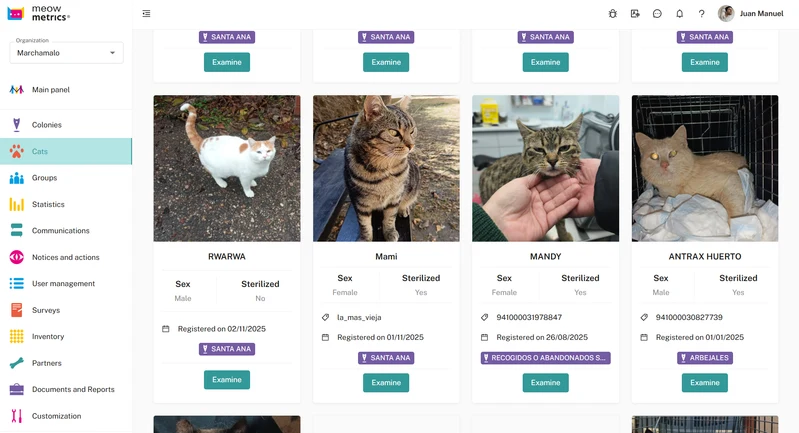
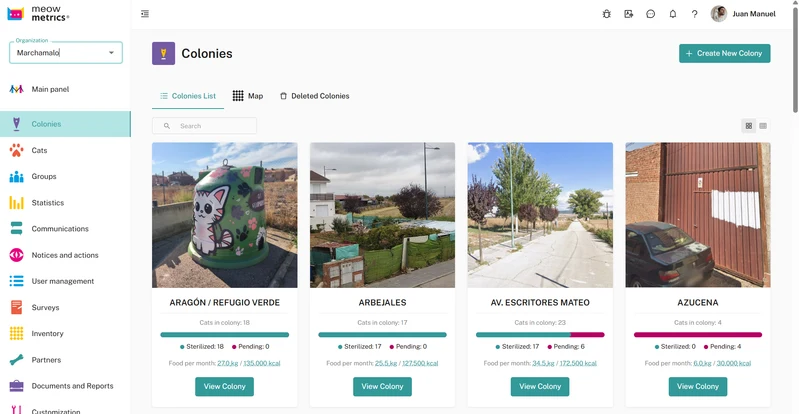
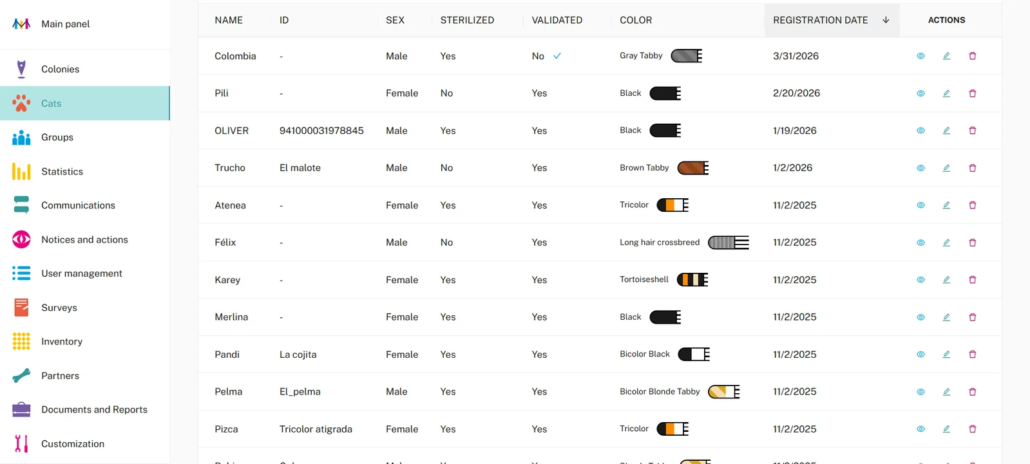
The company was built at the intersection of ecology, public administration and technology. Its flagship product, Meow Metrics®, is the first GovTech SaaS platform for community-cat colony management under humane TNVR methodology (Trap–Neuter–Vaccinate–Return). Every field action is recorded as a timestamped, geolocated, audit-ready data point.
Spain’s Law 7/2023 mandates all 8,131 municipalities to manage community-cat colonies humanely. Zoometrics is the compliant infrastructure. The EU welfare and traceability framework agreed in November 2025, with enforcement from 2028, extends this obligation Union-wide. Zoometrics built ahead of both.
Business model
Zoometrics operates a freemium SaaS model designed for the specific dynamics of public-sector and civil-society adoption:
- Free for individual volunteers (Explorer tier) — they generate the field data
- Annual subscriptions for municipalities, associations and foundations (€300–custom enterprise), scaled by colony count and feature set
- Add-ons: in-person training, custom development, and a 10% volunteer referral commission on contracts they originate
~€2,000 average contract value, annual and recurring. Revenue accelerating to ~€5,531 / month as of June 2026, from €38,440 collected bootstrapped since launch.
The freemium engine is also the go-to-market engine: volunteers prove its value and pull their municipality into a paid account. Sales cycles of 2–3 months are short for B2G because a champion is already inside before the contract starts.
A second revenue layer is in development: verified field outcomes align with TNFD Metric BD-9 (invasive-species management) and EU Nature Restoration Law urban-biodiversity targets. Municipalities, associations and impact foundations will be the first biodiversity-credit holders, with Zoometrics providing the issuance data infrastructure post-2028.
Impact
Zoometrics operates as a shared data infrastructure: volunteers manage colonies for free through the platform; municipalities pay for compliance, coordination and verified reporting. The result is a nature-positive feedback loop — fewer unmanaged predators, measurably less pressure on urban wildlife, and a field-evidence record that biodiversity-credit frameworks can act on.
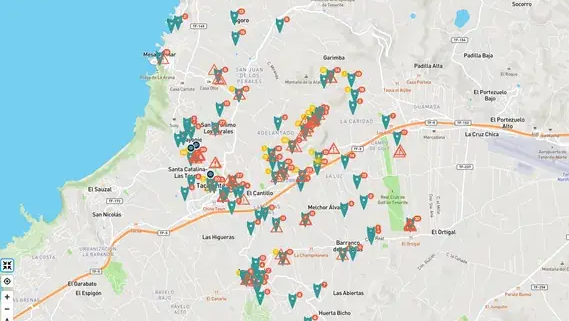
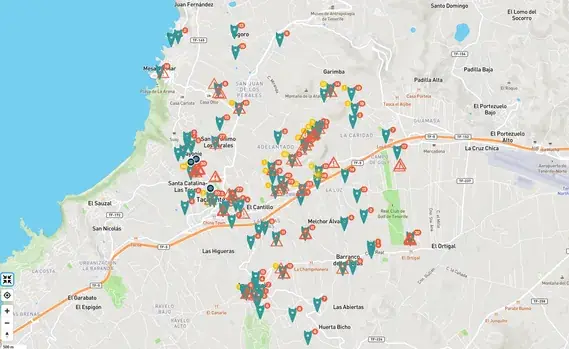
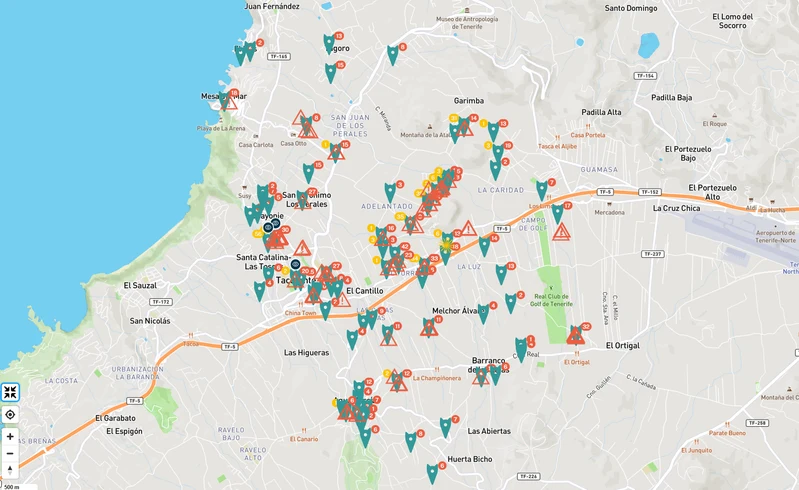
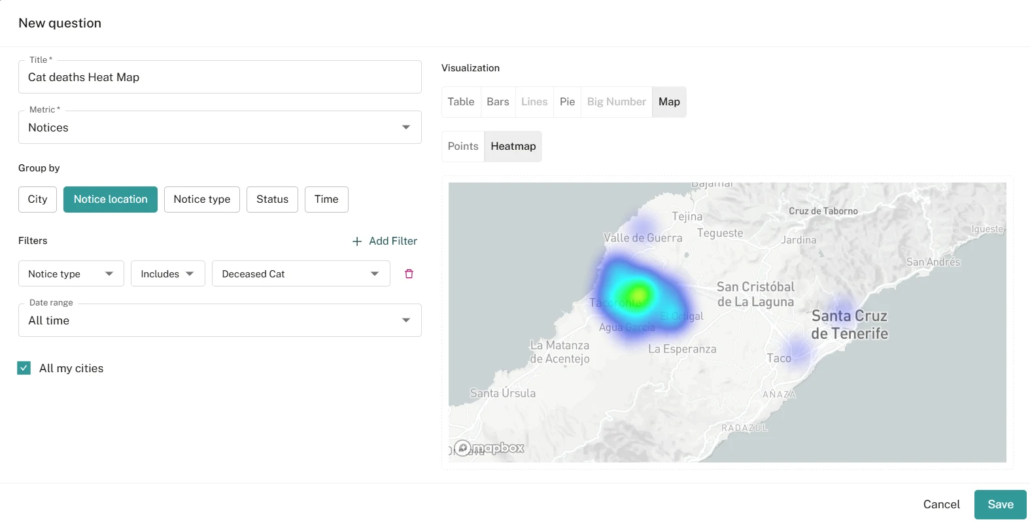
Every colony, public notice & field action is a geolocated, timestamped data point — audit-ready by default.
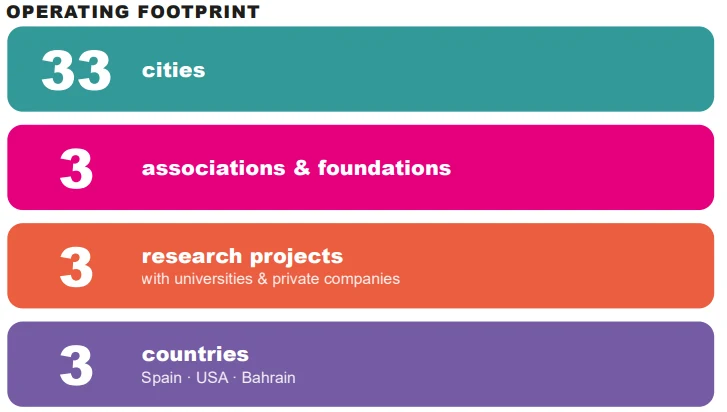
Córdoba, Spain — 225 colonies
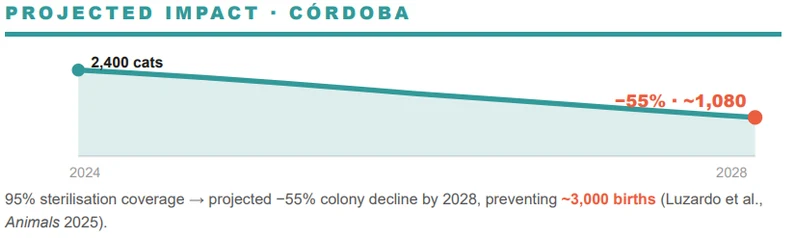
City-wide TNVR programme across 225 colonies and 2,400+ cats. 95% sterilisation coverage achieved. Projected −55% colony-population decline by 2028, preventing ~3,000 births at €0.62 per resident per year — the most cost-efficient urban nature intervention documented at scale. At the Albolafia mill colony, population fell from 18 to 6 cats; bird remains in scat disappeared, confirming measurable avifauna recovery.
La Graciosa, Natura 2000 (Canary Islands)
Protected island ecosystem. 81.4% sterilisation rate achieved in three days, reducing predation pressure on vulnerable endemic species. Sustained 93% coverage modelled to near-eliminate the colony — demonstrating TNVR effectiveness in the most ecologically sensitive contexts.
Aloha Animal Alliance, Hawaii (USA) — 9 districts
First supramunicipal deployment: one association coordinating colony data across nine Hawaiian districts through a single Zoometrics account. Demonstrates scalability beyond individual municipalities, enabling regional biodiversity coordination from one unified data layer.
Córdoba and La Graciosa data: Luzardo et al., Animals 2025, 15:482 · CC BY
Challenges and hurdles
- Municipal procurement cycles are the primary friction point. Budget-approval processes in Spanish and EU municipalities typically run 3–6 months. The freemium model mitigates this — the product is in use before the contract starts — but growth velocity remains constrained until institutional budgets scale.
- Public awareness of the biodiversity cost of unmanaged cat colonies is low. Decision-makers often frame the issue as animal welfare rather than urban-ecosystem management. Zoometrics’ evidence-backed positioning as GovTech for nature-positive outcomes is designed to correct this framing at the institutional level.
- Regulatory fragmentation across EU member states means each new national market requires localised compliance adaptation — a real cost, though one that also raises the barrier for any would-be competitor.
Future and opportunities
- Wild Metrics® — distributed environmental intelligence on urban fauna & flora: invasives, human-wildlife conflict, pollinators, native species.
- Census Metrics® — digital companion-animal census bridging national microchip registries with citizen participation.
- Ark Metrics® — citizen acquisition and activation layer turning passive supporters into verified field contributors.
Each module deepens the same verified data layer for the same municipal account — land-and-expand in one budget line, positioning Zoometrics as the shared biodiversity data infrastructure for European cities ahead of the 2028 EU mandate.
More community stories
NursiTree
Helping trees thrive in changing cities through flexible, relocatable planting systems.
Read the story
Radici
A free tool helping people choose the right native species to rebuild more resilient landscapes.
Read the story
COOLCITY
Satellite-based tools helping European cities plan blue-green infrastructure and adapt to climate change.
Read the story
