
Forestry · Smart Tech
Fold Ecosystemics
Data, sensors and mapping tools that help land managers make better decisions for wooded ecosystems.
France
Mission and inspiration
In the last decades, droughts, landslides, storms, forest megafires, and zoonoses have increased drastically. With the current outlook, trees are decisive derisking factors. Trees can regulate water flows, contribute to a cool microclimate, stabilise the ground, and create a favourable habitat for many species. Yet, European economies often only value trees for their timber, not for their abilities to create a stable environment for humans and other living beings.
Currently, there is a broad consensus on the need to restore ecosystems and biodiversity. However, this is a major task: resilient ecosystems are complex systems and they require many stakeholders to agree on the roadmap.
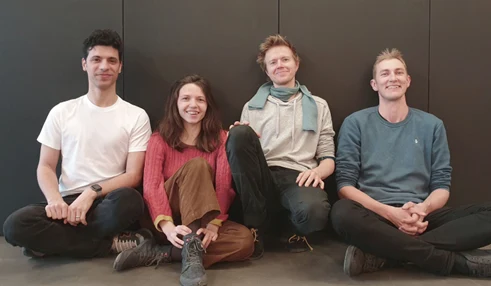
Fold Ecosystemics’ international team of co-founders (DE, FR, IT, UK) spent the last 6 years working together as data analyst consultants in environmental monitoring. Based on their experience with forest and landscape managers/farmers, they established Fold Ecosystemics in 2025 in the middle of the Vosges forest in Eastern France addressing a global challenge: growing environmental risks. Fold Ecosystemics empowers professionals and land owners to enhance all the positive effects trees have with a systemic approach to wooded ecosystems.
Fold Ecosystemics’ two main principles for better decision-making that will affect the decades to come: better data, greater cooperation. Its tools help ecosystem managers to take knowledge-based and data-driven decisions in a multi-stakeholder framework.
Business model
Through a SaaS-DaaS platform, clients can access:
- A close-to-nature forestry statistical and planning tool where economic variables are calculated directly from field inventories.
- A cartography tool with manyfold basemaps (i.e. hydrology, soil) for managers to plan their field operations with minimal impact.
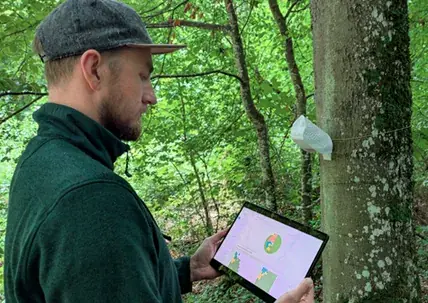
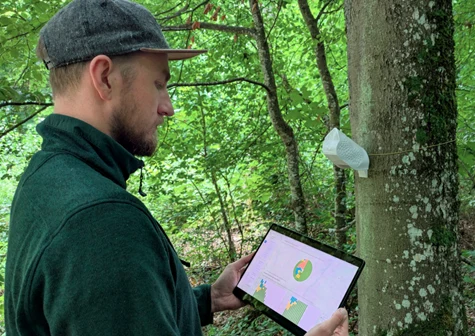
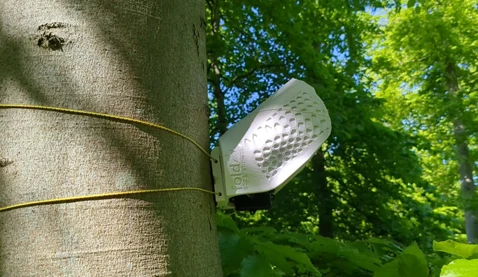
When real-time microclimate and/or biodiversity monitoring is needed, the company can provide a proprietary in-situ sensing infrastructure and a dashboard to display the indices and impact measurements (i.e. hygrometry, bird inventories, disturbances). The sensors have been built for intense outdoor usage. To allow long-term monitoring, they are low-powered and run on solar.
Besides the software and hardware tools for the better understanding of ecosystems, the team provides scientific support for protocol building, the facilitation of stakeholders/working groups, infrastructure/data maintenance and communication of the results — internal or to the public.
These tools are currently used by forest managers and conservation officers, smart and green city planners, ESG managers and researchers.
Challenges and hurdles
While the core technological building blocks have successfully been proven relevant for beachhead market customers, scalability and operational efficiency will be critical in order to create a valuable business offer. This holds especially true for the production of the sensor devices which is sensitive to global political events.
Future and opportunities
De-risking our environment is a collective task, which is why Fold Ecosystemics’ tools are designed to (re-)connect people, to foster cooperation, and to bring transparency and agency. Huge potential lies in the responsible application of AI technologies on the online platform: augmenting expert knowledge while respecting diversity of perspectives. Novel satellite and in-situ sensing techniques will further improve resolution and insights on the cartography tool.
More community stories
Hometree
Restoring Ireland’s native woodlands and temperate rainforest with communities, schools and landowners.
Read the story
Radici
A free tool helping people choose the right native species to rebuild more resilient landscapes.
Read the story
Irish Trees
A heritage estate model for nature recovery, proven across 750 acres at Dunsany Estate.
Read the story
