

Built Environment · Smart Tech
Swarmlab
A digital platform that turns biodiversity measures into manageable, measurable assets.
Germany

Mission and inspiration
Swarmlab is an interdisciplinary consulting and innovation company working at the intersection of biodiversity, climate resilience and nature-based transformation. Across years of practical projects — including cross-site biodiversity management developed for Siemens, projects with real-estate companies and public authorities such as Vonovia and the Berlin district of Marzahn-Hellersdorf, and a partnership with the Deutsche Wildtierstiftung — the team kept meeting the same structural problem: nature is planned brilliantly and then lost.
Ecological measures are designed by experts, written into reports, and filed away as PDFs and disconnected map files. Once the report is delivered, almost no one can see which measures exist across a portfolio, whether they were implemented, what they are worth, or how they perform over time. Biodiversity stays a flat report instead of becoming something an organisation can manage, value and invest in.
Swarmlab is building the Naturassistent to close that gap: a digital infrastructure that turns nature-based measures into manageable, measurable assets. Its role is to sit between the high-level frameworks now driving capital toward nature — the Global Biodiversity Framework, CSRD/TNFD, SBTN — and the operational reality on the ground, where measures are planned, delivered and proven to work — then documented and scaled across sites, portfolios and landscapes.
The vision: make biodiversity a manageable and investable part of real estate, urban development and infrastructure — not an afterthought, but a tracked, valued line item.
One principle runs underneath the whole platform: it takes over the bureaucratic, generic and organisational work, so that ecologists, planners and decision-makers can put their expertise where it counts — on sound judgement, creative solutions and productive collaboration. Technology carries the load; people stay in charge of the meaning.
That balance is reflected in the team building it: ecological and planning expertise, product and strategy, and a quantitative-technical foundation from an applied mathematician and data scientist — the three competencies this work demands, in one team.
Business model
The platform is offered as digital infrastructure (Software-as-a-Service) alongside Swarmlab’s established advisory practice, combining recurring platform revenue with project-based expertise. It follows a tiered model:
- An open entry tier that lowers the barrier to engaging with nature data and frameworks.
- A professional tier for the planners, developers and consultants who design and document measures day to day.
- An organisational tier for portfolio-scale management, monitoring and reporting.
Swarmlab’s existing consultancy work — biodiversity analysis, target-setting, implementation and reporting — generates revenue today and continuously feeds the platform with real-world requirements.
The defensibility is deliberate. Our advantage is not GIS drawing or generic automation, but deep, hard-won domain knowledge of how nature obligations and frameworks actually translate into ecologically sound, defensible measures on the ground. That knowledge is fragmented, context-specific and difficult to replicate — which is precisely what makes it valuable.
Challenges and hurdles
The category is young, so adoption takes patience: organisations are still learning to treat biodiversity as a managed asset rather than a compliance cost. Europe’s regulatory landscape is fragmented across countries and jurisdictions, which raises the bar for any tool that wants to be genuinely useful rather than superficial. And as in many nature projects, financing horizons are mismatched — annual public budgets and short developer timelines sit awkwardly against the long-term value nature creates.
Trust is the product: in a regulated field, practitioners only act on results they can defend. Keeping AI in a strictly assistive role — while every binding calculation stays deterministic and auditable — is demanding to uphold, and exactly what makes the outputs dependable.
Future and opportunities
Regulation and capital are moving in the same direction. The Global Biodiversity Framework and the EU Nature Restoration Regulation are turning biodiversity from a voluntary “nice to have” into a managed, reported and increasingly financed dimension of how organisations operate. Even after its recent simplification, CSRD now concentrates reporting duties on the largest portfolio owners — precisely the organisations we serve. Swarmlab’s near-term focus is to:
- Validate the platform in its home market and a small number of pilots.
- Expand across European markets as demand grows.
- Connect credible ecological outcomes to financial value — the hinge that lets private capital flow to nature with confidence.
More community stories
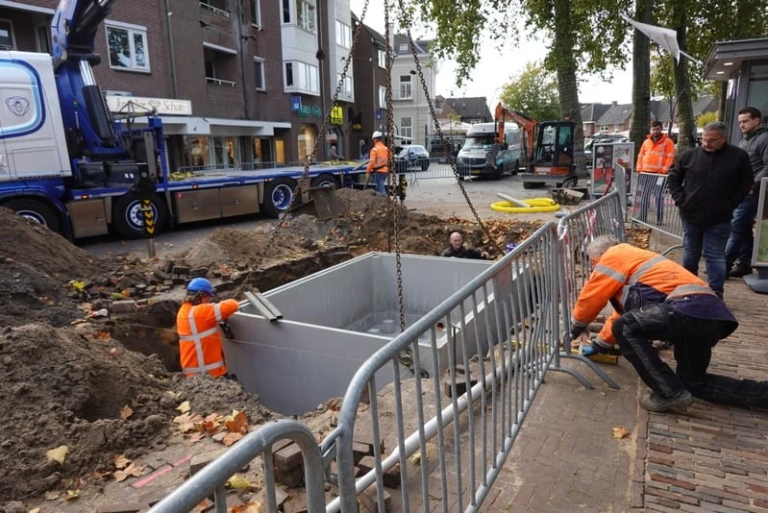
NursiTree
Helping trees thrive in changing cities through flexible, relocatable planting systems.
Read the story
Radici
A free tool helping people choose the right native species to rebuild more resilient landscapes.
Read the story
COOLCITY
Satellite-based tools helping European cities plan blue-green infrastructure and adapt to climate change.
Read the story