

Smart Tech
Radici
A free tool helping people choose the right native species to rebuild more resilient landscapes.
Portugal

Mission and inspiration
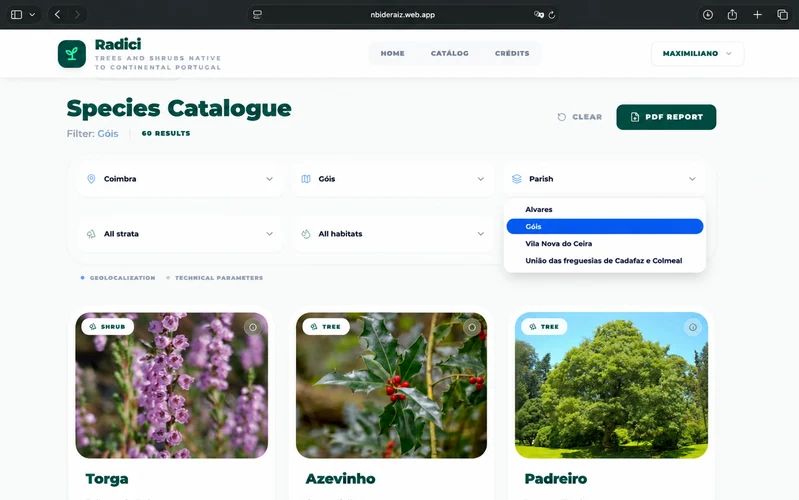
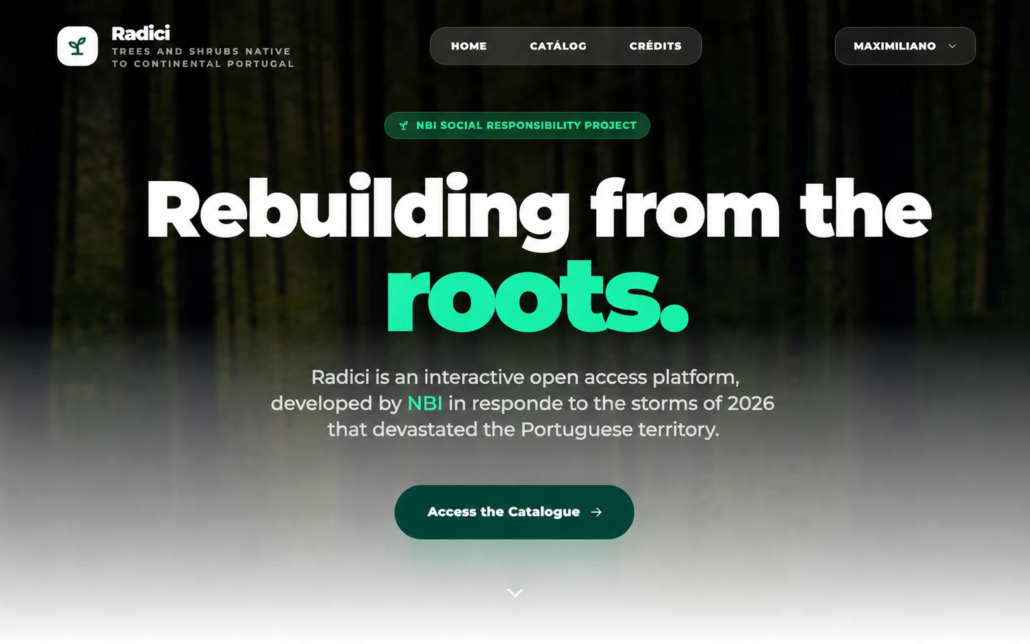
Radici is a climate resilience tool launched in April 2026, developed by NBI (Natural Business Intelligence), a Portuguese consultancy working at the intersection of ecology, EU environmental regulation, and nature finance. The tool emerged from the aftermath of Storm Kristin, which hit Portugal in January 2026. The NBI team was in the landfall region and was caught by Kristin’s destruction. From then on, a question remained: How can people rebuild a more resilient territory? Radici uses decades of ecological expertise to help determine what species are better fitted for a hedgerow, a stream bank, or an urban canopy. Answering this question is providing free access to people making everyday land-use decisions on the ground.
Radici aims to clarify which native species, in what exact place, thrives for a more resilient territory? It delivers immediate answers with hyperlocal precision below the NUTS-3 administrative level. The tool was designed under the principle that high technical skill should feel simple and that democratising ecological knowledge requires science, and most of all, it requires social empathy. The result is a resilience-focused tool accessible to municipalities, landowners, landscape architects, restoration practitioners, city planners, foresters and farmers rebuilding ecosystems alike. The tagline “Where resilience takes root.” frames the broader mission of Radici aligned with territory resilience, species adaptation, and climate resilience as inseparable foundations for the EU’s Nature Restoration Law era.

Business model
Radici is deployed as a web-based application (at: radici-nbi-tools.web.app) operating on a freemium model. A free tier provides accessible species recommendations for any user, opening expert ecological intelligence to citizens, smallholders, and community initiatives that have historically been excluded from this kind of advisory work. A dedicated services line offers tailored implementation support for municipalities and institutional clients, including restoration project design, additional selection of species (for cover crops, for example) and Nature Restoration Law compliance pathways.
An additional layer targeting the implementation of a marketplace is expected in the app, allowing at closing the gap between suppliers and clients.
The tool is currently live in Portugal, with a beta version released on April 13, 2026. Launch traction has been notable: Radici registered 2,3K users across 32 countries and was covered by 19 national media outlets.
Challenges and hurdles
Building Radici has required reconciling two often-opposing demands: the depth of ecological data needed to make reliable recommendations, and the simplicity required for a first-time user to act on those recommendations with confidence. Hyperlocal precision at parish level depends on a substantial backbone of species, soil, climate, and bioregional data, under an appropriate and cost-controlled IT structure.
Radici sits in a market where “plant apps” are familiar but “resilience tools” are not yet a recognised category. A second challenge has therefore been about positioning, i.e. make clear that what Radici answers is fundamentally different from web-based tools on plant identifications or observations. Communicating such a distinction has required deliberate, sustained work across every external touchpoint, from media to policy conversations.
Finally, Radici is being built in a window where the EU Nature Restoration Law is moving from regulation to implementation. That creates opportunity, but also pressure: the tool must be ready, validated, and scaled across Member States at a pace that matches the policy timeline.

Future and opportunities
The near-term roadmap centres on the beta release and then a EU-wide expansion, extending Radici’s validated recommendations from Portugal into the remaining 26 Member States. Alignment with the Nature Restoration Law — designed from day one — positions Radici as a practical infrastructure for local governments, land managers and landowners that are required to work on national restoration plans through 2030 and beyond.
Beyond geographic expansion, the NBI team sees opportunity in deeper integrations: with public procurement workflows for restoration projects, with climate adaptation planning at city and regional level, and with the emerging architecture of nature credit and biodiversity finance instruments across Europe. Wherever a decision is made about what to plant, where, and why, Radici must be made for every restored hectare in Europe that contributes to a territory that is more genuinely resilient.
More community stories
Fold Ecosystemics
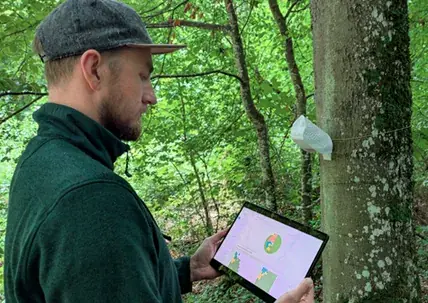
Data, sensors and mapping tools that help land managers make better decisions for wooded ecosystems.
Read the story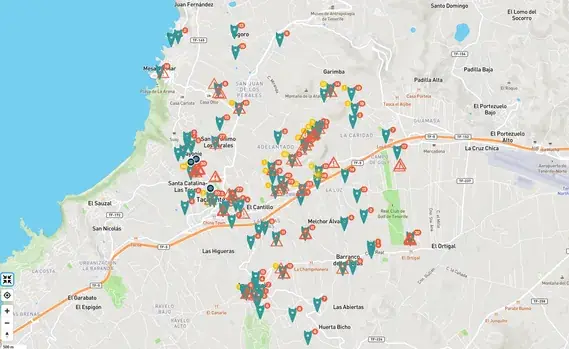
Zoometrics
Digital tools helping cities manage community cat colonies humanely and protect urban wildlife.
Read the story
Swarmlab
A digital platform that turns biodiversity measures into manageable, measurable assets.
Read the story
